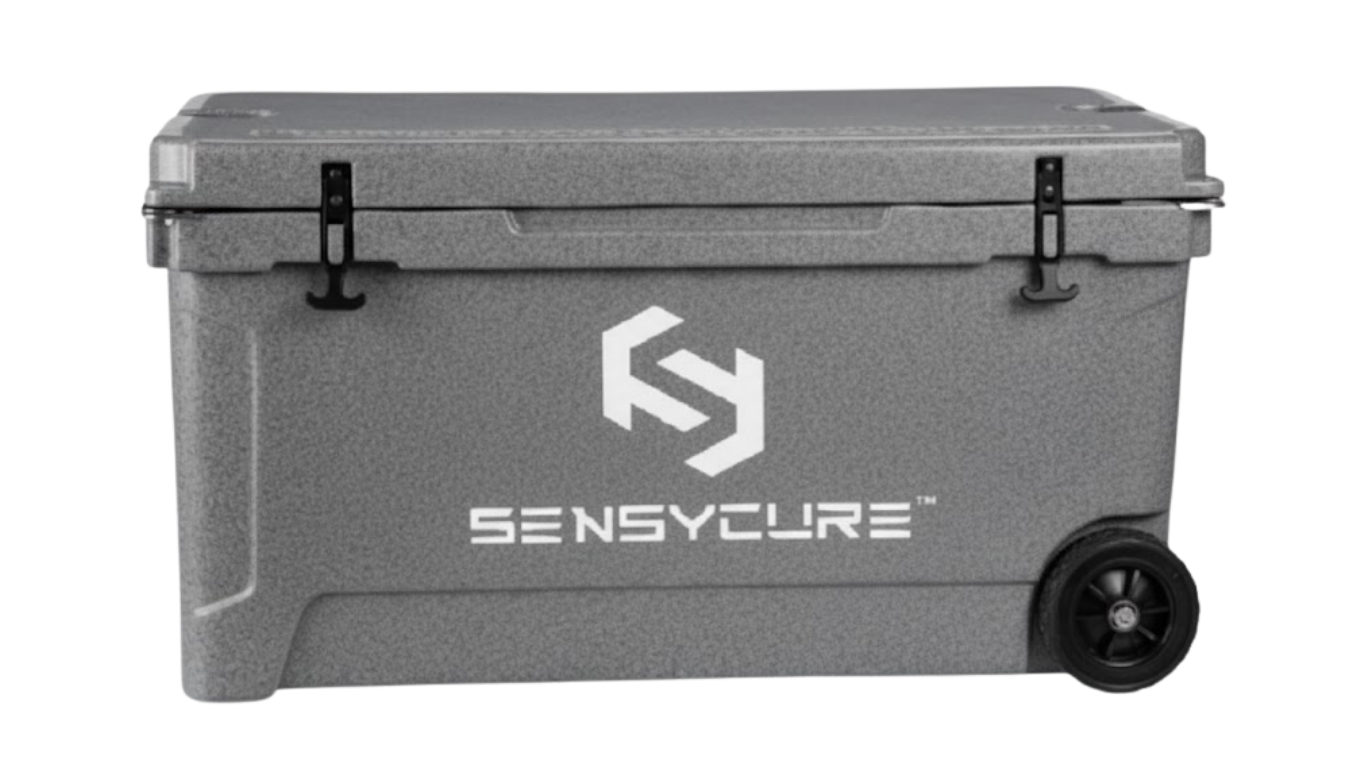
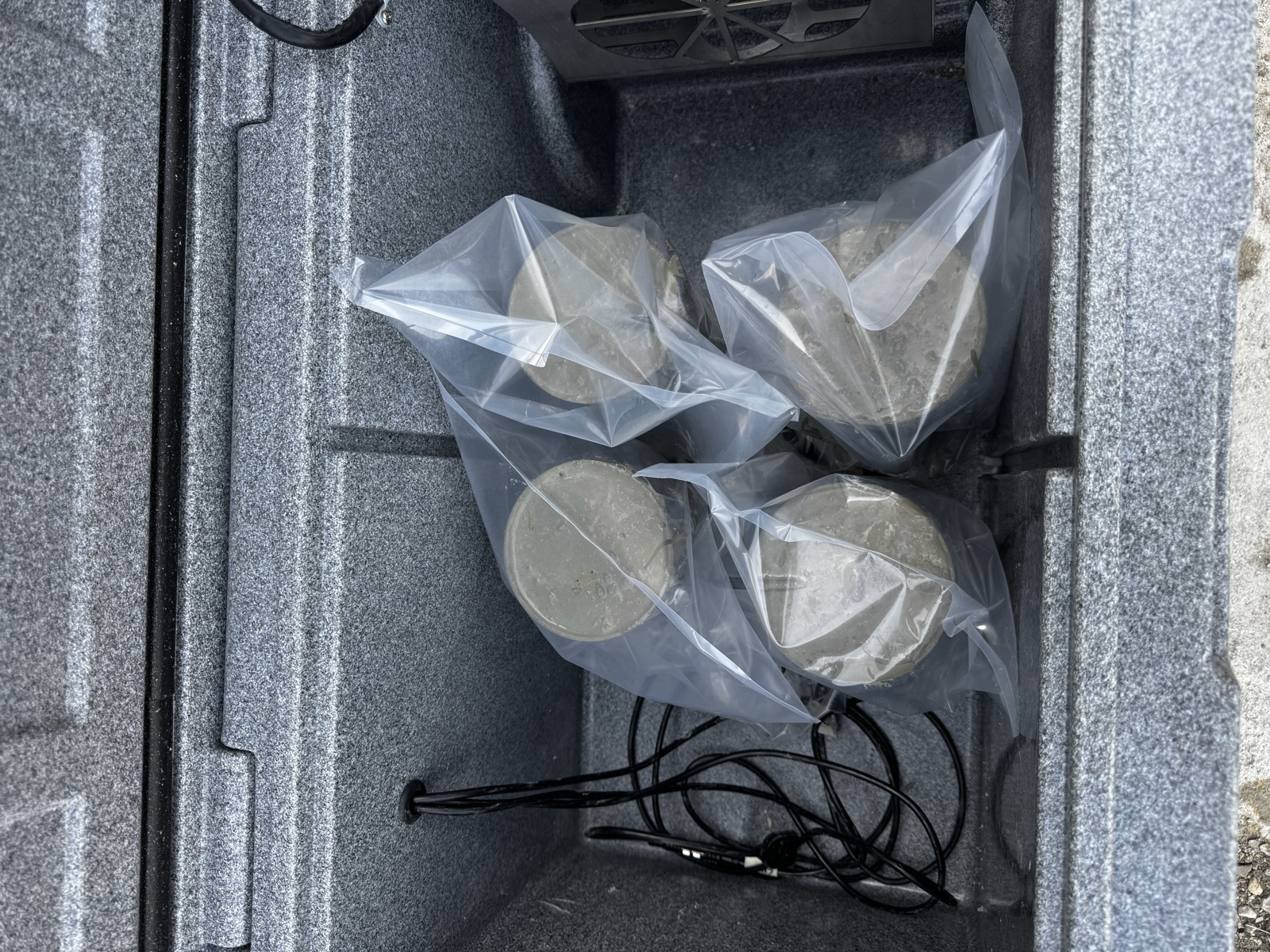
Replicate real-world curing conditions in the lab. Automatic temperature-matching for ASTM-compliant cylinder curing — with full cloud logging via SensyHub.
SensyCure eliminates the gap between lab conditions and field conditions, giving you test results that actually reflect your pour.
Match-cured cylinders reach target strength sooner because they mirror actual field conditions. Strip forms hours earlier with confidence.
Reduce expensive lab testing cycles. Automated operation eliminates manual monitoring and decreases labor costs significantly.
Meets ASTM C31, ASTM C192, and ASTM C1074 standards. Full compliance documentation logged automatically to SensyHub cloud.
Standard curing at 73°F often produces misleading results. Match curing tests against real conditions, reducing false failures and retesting.
SensyCure continuously reads the temperature of your actual concrete pour and adjusts the cure chamber to match — automatically and in real time.
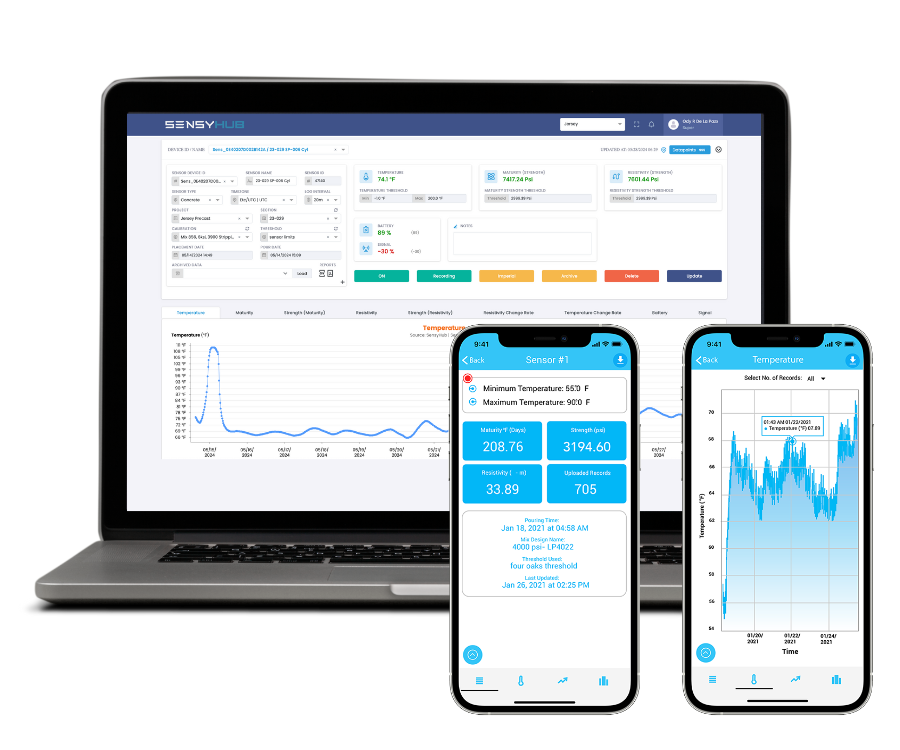
Every curing cycle is logged to SensyHub with complete temperature history, maturity data, and compliance documentation — accessible from any device.
FREQUENTLY ASKED QUESTIONS
Match curing replicates the actual temperature conditions of in-place concrete on laboratory test cylinders. This produces strength results that accurately reflect the real structure — unlike standard-cured cylinders stored in lime-saturated water baths at 73°F, which can overestimate or underestimate actual concrete strength.
Yes. SensyCure is compliant with ASTM C31 (field-cured specimens), ASTM C192 (lab-mixed specimens), and ASTM C1074 (maturity method). All temperature data is automatically logged to SensyHub for documentation and QC records.
SensyCure automatically logs all temperature and curing data to the SensyHub cloud platform. Engineers and QC teams can monitor curing progress remotely, receive alerts, and export compliance reports from any device.
Standard-cured cylinders are stored at a constant 73°F in lime water, which doesn't reflect real job site conditions. Match-cured cylinders follow the actual temperature profile of the in-place concrete, producing strength results that are typically more representative — often revealing strength differences of 500-900+ psi compared to standard methods.
Get a personalized demo and see how SensyCure improves your QC workflow.