- SensyCure tracked the bed within 0.69–0.79°F average gap across two days of testing
- The legacy heated-mold system ran 6.8°F above the bed on average, spiking 27.4°F above at peak
- SensyCure maturity match: 99–101%. Legacy system: 108.4% (inflated by over-curing)
- Legacy break results looked strong (3,792 PSI) but reflected over-cured cylinders, not real bed concrete
- Two independent SensyCast probes on the bed tracked within 0.2°F — confirming the reference was accurate
Why This Trial
A precast producer wanted to evaluate SensyCure against their existing match-cure system — a clamshell heated-mold setup they'd used for years — on an insulated wall panel pour in cold-weather conditions. The release requirement was 3,500 PSI after a 12-hour overnight cure, with ambient temperatures dropping from 43°F to 28°F. The question: which system produces a cylinder that actually represents what's happening on the bed?
Over two nights, SensyCure and the legacy system ran cylinders from the same pour in parallel. The legacy system was instrumented with Sensytec probes so both systems could be measured against a common bed reference.
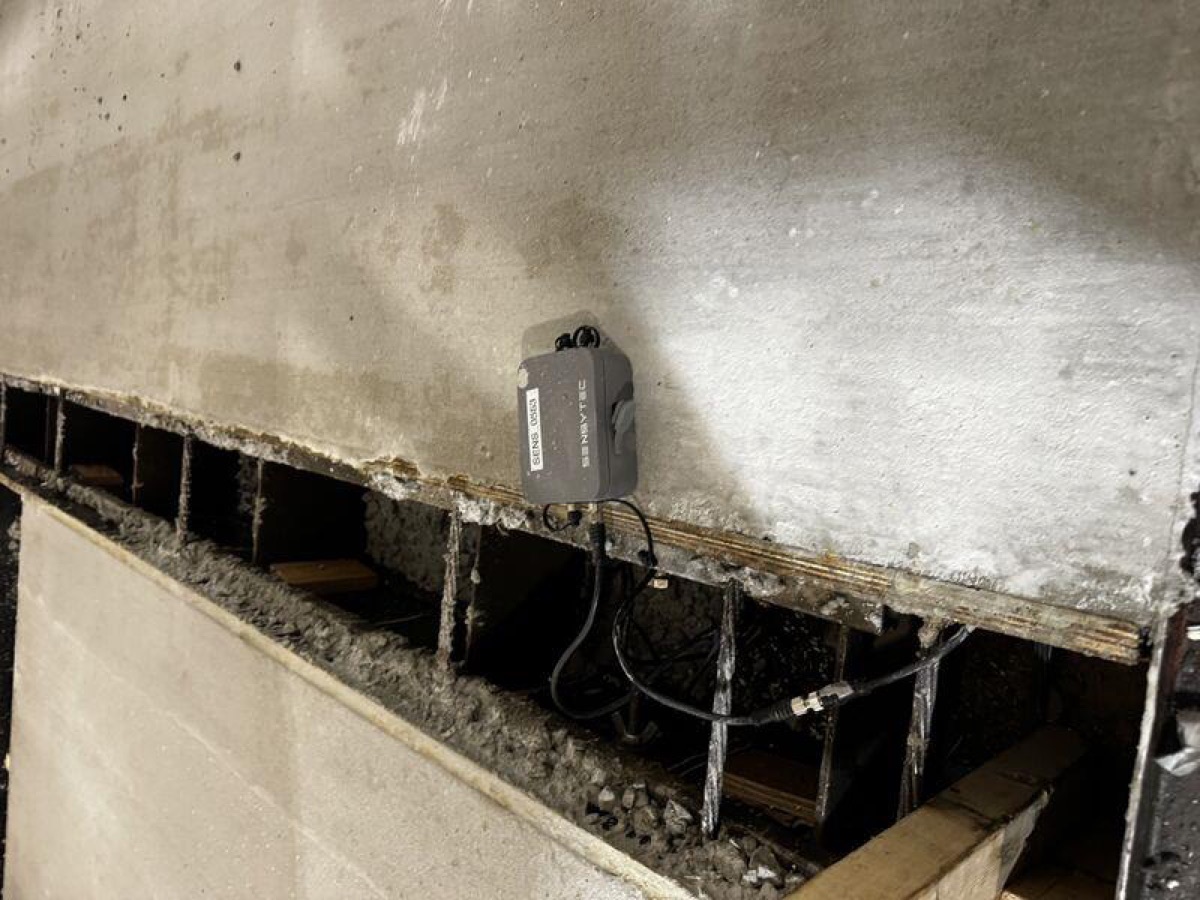
SensyCast data logger on the prestressed bed with a probe embedded in the top pour.
Day 1: SensyCure Accuracy Validated
On Day 1, SensyCure was put against the bed reference over a full 12-hour overnight cure. The control cylinder inside the SensyCure chamber tracked the bed temperature almost exactly through every phase: the slow dormant period, the steep exothermic ramp peaking at 5.4°F/hr, the plateau at peak, and the cool-down.

Full 12-hour profile. Reference (blue) vs SensyCure cylinder (orange). Source: SensyHub.
Day 1 confirmed the SensyCure system does what it claims: it replicates the bed's thermal profile inside the curing chamber with tight fidelity. Both the SensyCure and the legacy system cylinders passed the 3,500 PSI release threshold. But Day 1 wasn't a true head-to-head — the probes for each system were in different spots on the bed, so the two systems weren't matched against the same reference. That was the focus for Day 2.

SensyCure chamber with test cylinders inside during the overnight cure.
Day 2: The Controlled Head-to-Head
For Day 2, the variables from Day 1 were controlled. The SensyCast reference probe and the legacy system's Type K thermocouple were placed side by side in the same concrete at the same bed location. SensyCure cylinders were wrapped in plastic to retain moisture. An additional SensyCast probe was placed on the legacy heated molds to independently measure what was actually happening inside them.

Both systems' probes side by side in the same concrete on the bed.
The temperature story split cleanly. SensyCure tracked the bed from pour to peak. The legacy system did not.
SensyCure: 0.79°F average gap vs bed

SensyCure cylinder (orange) tracking the bed reference (blue). Peak at 84.5°F vs bed peak 84.3°F.
Legacy system: spiked to 111.7°F while the bed peaked at 84.3°F

Legacy cylinder (pink) heated to 111.7°F — 27.4°F above the actual bed. Independent SensyCast probes on the mold measured this directly.

Two independent SensyCast probes on the bed tracking within 0.2°F — confirming the reference measurement was accurate.
Why the PSI Gap Is Misleading
On the surface, the legacy system looks like the winner: 3,792 PSI vs 3,121 PSI. Look closer and that result is an artifact of the mold heating cylinders past the actual bed temperature.
The bed peaked at 84.3°F. The SensyCure cylinder peaked at 84.5°F — a 0.2°F difference. The legacy cylinder peaked at 111.7°F — 27.4°F above what the bed actually experienced. Hotter cylinders accumulate maturity faster than the real concrete does, so their PSI numbers come in higher. But that strength belongs to the over-cured cylinder, not the bed.
The risk
A release decision based on an over-cured cylinder can greenlight detensioning a panel that hasn't actually reached transfer strength. The cylinder says 3,792 PSI. The wall panel — which is what the strands get cut against, lifted out of, and shipped on — may be much weaker. On this pour, SensyCure said the panel hadn't hit 3,500 PSI yet at 12 hours. That's a harder truth to hear, but it's the truth the plant needs to make a safe call.
Why Legacy Systems Drift
Two contributors showed up in the trial:
1. Heated-mold control can't follow a flat bed
Clamshell heated molds with direct-contact heating elements are designed to drive temperature up fast. On a cold-weather pour where the bed itself only reaches 84°F, a heated mold can easily overshoot to 110°F+ and stay there. Fine-grained cooling to match a cooler bed isn't really in the system's design.
2. Thermocouple placement can bias the reference

Legacy system thermocouple wrapped around a prestressing strand at an insulation boundary.
When a reference thermocouple sits in contact with the steel strand rather than in the concrete mass, it reads a blend of steel temperature and concrete temperature. Steel conducts heat faster, so the reference can drift from what the concrete is actually doing. The SensyCast probe, embedded in the concrete mass and away from steel boundaries, gives an unbiased reading of the bed concrete.
How SensyCure Solves It
SensyCure pairs a SensyCast sensor embedded directly in the concrete with a controlled curing chamber that reads the bed's real-time temperature and replicates it inside the chamber. The control loop runs on a 15-second window with a 30-second log interval — fine-grained enough to hold the cylinder within a degree of the bed across every phase of hydration, including the cool-down where heated molds tend to hold residual heat.
The result is a cylinder that reaches the same strength at the same time as the in-place panel — so the transfer-strength decision is an honest read on the actual concrete, not an over-cured stand-in.

SensyCure chamber with three capped cylinders matching the bed temperature.
What This Means for a Precast Plant
1. Release decisions are only as accurate as the cylinder.
If the cylinder cures hotter than the bed, the plant can release a bed that hasn't actually reached release strength. That's a QC and safety risk that doesn't show up in the PSI number.
2. Higher PSI isn't always better.
A system that consistently produces inflated breaks is easy to like in the short term. It also masks production issues you'd rather catch: cold-weather slow-downs, mix inconsistencies, heating problems in the bed itself.
3. Temperature accuracy is verifiable.
Two Sensytec probes on the bed tracking within 0.2°F of each other gives you a reference you can defend — in audits, in DOT submissions, and in litigation years later. The data record stands on its own.
Conclusion
Over two days and four sets of cylinder breaks, SensyCure consistently tracked the panel temperature within about 0.7°F and achieved a 99–101% maturity match. The legacy match-cure system over-cured cylinders by an average of 6.8°F — up to 27.4°F at peak — producing break results that looked strong but didn't represent the actual concrete in the panel. When the decision is "can we cut the strands and lift this panel," accurate match-curing isn't a nice-to-have. It's the point.
Frequently Asked Questions
What is match-cure accuracy and why does it matter?
Match-cure accuracy is how closely a test cylinder’s temperature profile tracks the in-place concrete on the bed. If the cylinder cures hotter or cooler than the bed, its break strength will not accurately represent the actual release strength of the structural element.
How accurately did SensyCure track the bed in this trial?
Across both days, SensyCure tracked the bed reference temperature within an average of 0.69–0.79°F, stayed within 1°F of the bed for 72% of the cure window, and achieved a maturity match of 99–101% versus the bed.
Why did the legacy match-cure system produce higher break strengths?
The legacy clamshell heated-mold system over-cured the cylinders — running 6.8°F above the bed on average and spiking 27.4°F above at peak. Hotter cylinders gain maturity faster than the real concrete, so their PSI breaks look higher, but they no longer represent what is happening in the bed.
What is the risk of using an inaccurate match-cure system for release decisions?
If cylinder cures don’t match the in-place concrete, a release decision can be made on cylinder strength that overstates the actual transfer strength. That’s a quality and safety risk: the plant can cut strands and lift a panel that hasn’t truly reached the required transfer strength even when the cylinder says it has.
How does SensyCure prevent over-curing?
SensyCure reads the bed’s real-time temperature profile from a Sensytec sensor embedded in the actual concrete and replicates it inside a controlled curing chamber with a 15-second control window. The cylinder cures at the same rate as the bed — not hotter, not cooler.
How was bed temperature verified in the trial?
Two independent SensyCast probes were placed in the same concrete on the bed during Day 2. They tracked within 0.2°F of each other across the full cure, confirming the bed reference measurement was accurate and consistent.
Related Case Studies
See SensyCure on Your Bed
Schedule a trial at your precast plant and see the accuracy for yourself.
Request a Demo