How do concrete sensors speed up precast bed turnover?
Sensors continuously log temperature, and a calibrated model estimates strength. This helps QC teams schedule verification before stripping or detensioning. Cycle improvement depends on the mix, curing conditions, test schedule, and release requirements. See the NAPCO demonstration with SensyCast and SensyCure.
What is match-cure and why does it matter for prestressed concrete?
Match curing follows the bed’s temperature history in companion cylinders to support release-strength evaluation under representative conditions. Reference placement, moisture retention, and temperature verification belong in the plant procedure. Review the two-day trial.
What should a plant verify about ASTM and DOT requirements?
Verify the measurement method, calibration, and evidence required by the project. An ASTM reference or a software checklist mode does not establish DOT product approval or plant certification. Confirm release requirements with your QC lead and the project authority.
How much does a SensyCast sensor system cost?
A quote depends on simultaneous beds and pours, sensors, probes, gateways, connectivity, calibration, software, training, and match-curing needs. Bring these details to scope the system. Payback depends on your plant’s actual cycles and costs.
Can sensors replace cylinder testing entirely?
Not automatically. Keep the acceptance and verification tests required by your specification and quality plan. Sensors provide continuous estimates for production decisions; changes to the testing program need the appropriate review.
Where do you install the sensor in a prestressed bed?
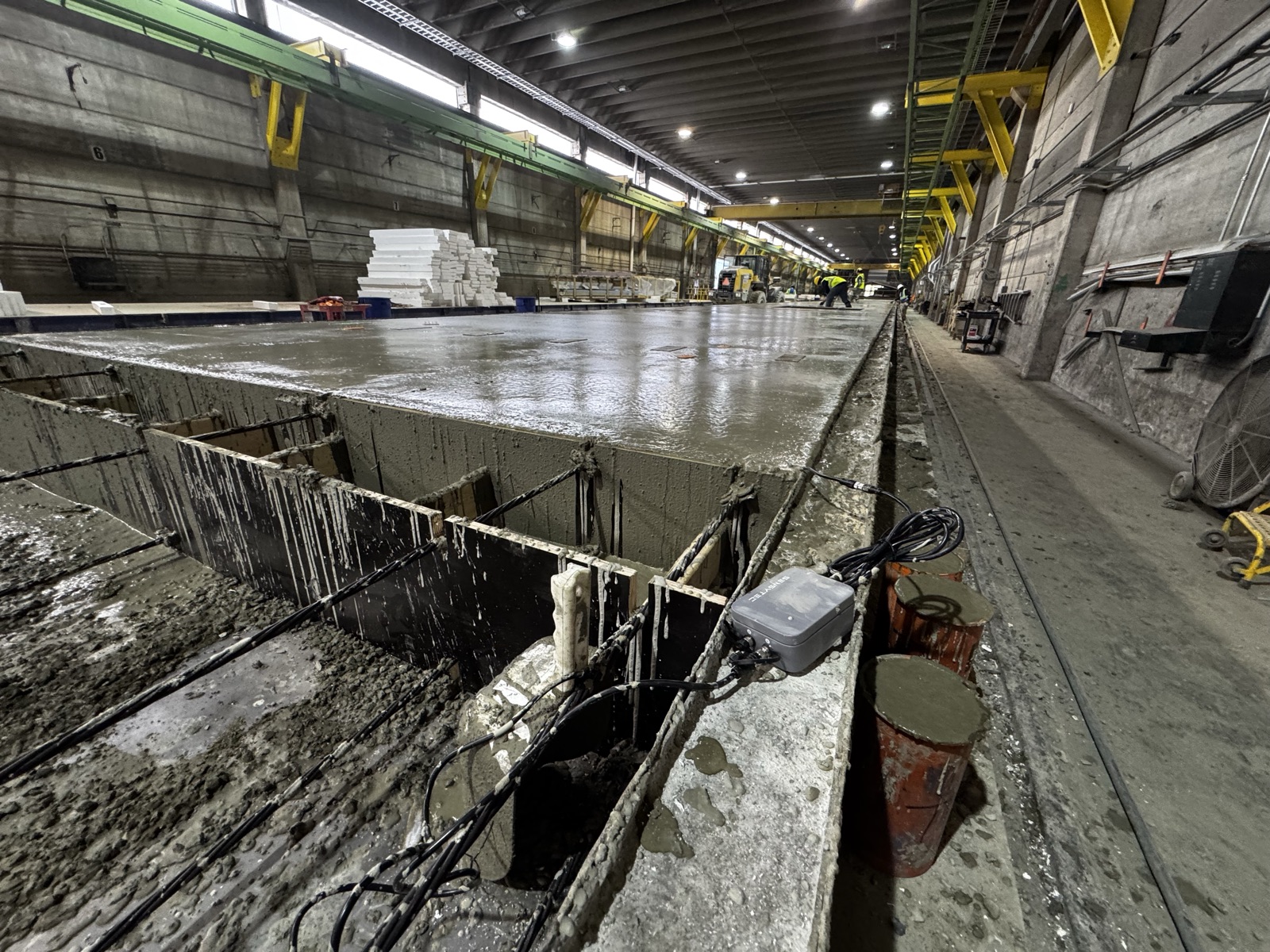
Agree on measurement locations with the QC lead before the pour. The probe needs to represent the concrete of interest; transmitter and gateway locations need reliable communication and access. Validate placement, coverage, and each sensor’s bed and mix assignment during the trial.
Which PCI manuals does SensyHub support?
Both major PCI plant-certification manuals: PCI MNL-116 for structural precast and bridge products, and PCI MNL-117 for architectural precast. Each is a first-class checklist mode in the SensyHub QC Module, driven by the plant profile. Plants certified to more than one manual can run them in parallel on the same site.
Does SensyHub support NPCA QCM-001 plants?
Yes. NPCA QCM-001 is a first-class checklist mode in the SensyHub QC Module. Plants producing utility, drainage, manholes, vaults, septic, or any other NPCA scope can run the daily flow in NPCA mode and produce QCM-001 audit documentation. Multi-plant operations can mix PCI, NPCA, and DOT modes per site.
Does SensyHub support state DOT plant certification programs?
Yes. State DOT certification is a first-class mode in the SensyHub QC Module. The module supports TxDOT, FDOT, Caltrans, and other AASHTO-aligned state DOT plant certification programs. Plants that ship to a single DOT or to multiple DOTs can configure each program independently and run them in parallel where required.